
![410 FEND '65-SR | '65 Fender™ Super Reverb [Black Face] | '65 CTS™ 4×10″ | Cabinet Impulse Response](http://tacosounds.com/cdn/shop/files/410-fend-65-sr_main.jpg?v=1777550872&width=100)



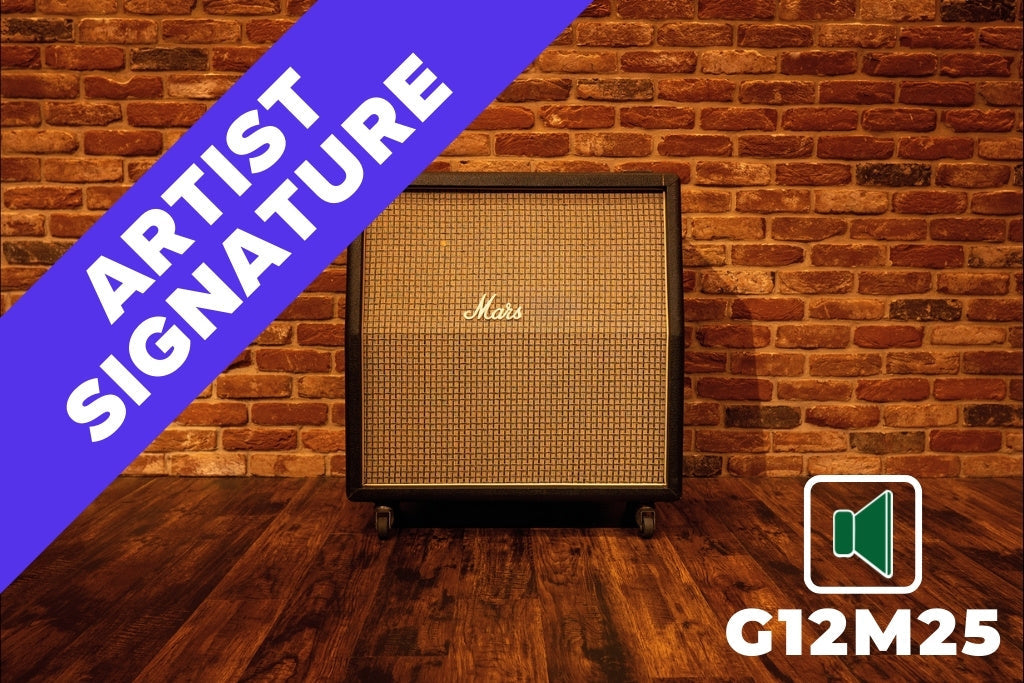
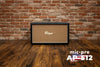
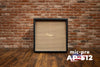
The Marshall™ 4×12 1960AX slant cabinet loaded with four Celestion™ G12M25 Greenback speakers. The one Shibasaki reaches for on parts that call for warmth, controlled breakup, and a more open midrange — territory where the Bogner V30 turns out too aggressive. The enclosure is a classic Marshall plywood build, distinguished from the standard 1960A by its speaker configuration. In contrast to Bogner-style stiff construction, this cabinet has its own hand in shaping the tone, bringing low-mid body and a slight softness to the top-end transients.
Speakers and why Shibasaki chose this cabinet
Four Celestion™ G12M25 Greenbacks, 25W each. The historical reference that defined classic British rock — a vocal midrange, creamy compression as the speaker enters breakup, and a top end that rolls off naturally without harshness. Less aggressive than the V30, more colored than a neutral monitor speaker — sitting between the two. An option for territory where the Bogner V30 turns out too aggressive: classic-rock voicings, mid-gain rhythm with body, and lead tones that call for warmth rather than slice. The 1960AX with Greenbacks settles in naturally from clean through modern mid-gain without pushing the mix on presence.
Microphone capture — 9 single + 76 mixed-mic IRs
Six microphones across 9 single-mic positions, combined into 76 mixed-mic IRs. The mic configuration was chosen to draw out the midrange weight of this cabinet and the compression character of the Greenback, including off-axis positions that match the tone-shaping flexibility this cabinet responds to. Placement and tonal balance entirely under Shibasaki's supervision. The plywood cabinet voicing of the Marshall™ 1960AX, the vocal midrange and creamy compression of the G12M25 Greenback, and Shibasaki's mic discipline are captured here as a tool that covers classic rock through modern mid-gain.

Bonus Gift: SHIBASAKI's AXE-FX III Presets
Two Shibasaki's presets (16 tones via SCENE) | For FW14.05 - Preamp/tone differs in newer ver.
Warm midrange and restrained highs with controlled distortion response. Covers classic rock through modern tones.
Single Mics
Files marked with f are far position — recorded slightly further from the cabinet than the standard close-mic, capturing a touch more air and room interaction. Other suffixes (v1, v2, off) indicate alternative placements or rotations.


Mix Files
Two mics blended at fixed ratios. The numbers in the filename (e.g. 3-7) indicate the blend ratio. Below are three representative examples (57III + R121); the full library contains many more combinations.
Microphones Used

01 / dynamic
57IIISM57 Unidyne III
based on a Shure™ SM57 Unidyne III
The most-used dynamic mic in rock history. Tight, punchy midrange — the standard close-mic on guitar cabs since the 1960s.

02 / dynamic
906e906
based on a Sennheiser™ e906
Modern dynamic with flat-design body — sits flush against the grill. Tight midrange focus, easy to position.

03 / dynamic
M421MD421
based on a Sennheiser™ MD421
Large dynamic mic with detailed response and bold low-end. A studio standard on guitar cabs and toms.

04 / condenser
offU87
based on a Neumann™ U87
Studio standard large-diaphragm condenser. Off-axis position.

05 / ribbon
R121R-121
based on a Royer Labs™ R-121
Premium ribbon microphone with smooth frequency response and natural sound reproduction.

06 / ribbon
VR1
based on a sE Electronics™ VR1
Ribbon microphone with warm, smooth low-mids. Tames harshness and adds a vintage-tape character.

Shibasaki Hiroshi
WANDS
Since his 1991 debut as the founding guitarist of WANDS, Shibasaki has been at the forefront of Japanese rock through the band's multi-million-selling run. His work extends to artists such as abingdon boys school, T.M.Revolution, and Nanase Aikawa, among many others, while he continues to stay active across a wide range of band, session, and live performance projects today.